
How To Buy A Plots In Islamabad In 2026: Necessary Legal Checks, Cost, And No-No’s
For many families, buying a plot in Islamabad is the single most expensive purchase they’ll make and it’s also the most aggressively promoted. Touts advertise “prime locations” and “secured returns”, but ultimately, what makes an investment safe are a lot less sexy: what authority owns the land, whether the project has a Layout Plan (LOP) and No Objection Certificate (NOC), whether the seller has a legal claim to transfer the plot, and how much it will actually cost, once taxes and fees are included.
This is a guide for buyers wanting to make evidence choices. This advice represents the applicable tax system and enforcement environment in October 2026, and guides you on where you can check each claim yourself.
Key Takeaways
- First, jurisdiction. What is being sold as “Islamabad” could be CDA, RDA, or something else. Find out before proceeding further.
- It has identified close to 100 illegal housing and agro-farming projects and issued notices. In September 2026, it sealed site and marketing offices of a Zone-IV scheme that failed to obtain layout plan approval and NOC.
- Approval is not title. A valid scheme does not you cannot show that the individual parcel of land is real, the seller possesses they or pay the bill.
- The new Finance Act 2026 means all filers pay 1.25% flat (buyer, Section 236K) and 2.75% (seller, Section 236C). Taxes for non-filers are significantly more expensive.
- Don’t pay upfront without factually checking. Check the authority and plot file, the seller and the total price in writing.
What’s New in 2026: A Brief Summary
| Area | Current position (as of October 2026) | Why it matters to a buyer |
| Enforcement | CDA issued notices and show-cause notices time and again, sealed offices of unapproved Zone-IV scheme, and has told utility agencies to connect only those connections which are strictly as per the CDA-approved layout and building plans | Un-approved plots may never be provided legal utility connections |
| Illegal scheme lists | On its website, CDA has published and periodically updated a list of illegal housing schemes and agro-farming schemes. | Cross check the list before handing over the token amount |
| Property tax (federal) | Finance Act 2026, effective 1 July 2026, set flat filer rates at 1.25% (buyer, 236K) and 2.75% (seller, 236C) and removed the additional late filer band | Filer status is the single biggest factor affecting the amount of the transfer |
| Valuation in ICT | FBR published SRO 163(I)/2026, which invalidated SRO 2392(I)/2025. The value of property has been increased by 15% to 75%, on average. DHA areas were omitted from the revised system | Tax is levied on the higher between price paid and notified value |
Step 1: Clarify Your Intention Prior to Shopping
- The risks you can take depend on the goal you are aiming for.
- Building your home in the near future. Consider: possession date, building permission, access roads, services, and drive time to schools, hospitals and workplaces. An undeveloped, cheaper block may be less risky than an already-developed, more expensive block.
- Don’t be swayed by the price displayed on the signs, check for approval status, development progress, the percentage of plots in the same block that are owned and resell ability of identical plots. Road or commercial development plans nearby doesn’t always equate to guaranteed returns.
- Developing at a later stage. Weigh up the purchase price against construction costs, maintenance and membership dues and the land holding cost for a number of years.
- Draft your goal in writing prior to approaching any dealer. It is so much easier to turn down things that are wrong.
Step 2: Confirm Which Authority Has Jurisdiction
Language in marketing is not a boundary for the law. Before you evaluate the scheme ascertain where the land really is and who is making the law over it.
- Private land within the ICT is usually administered by the CDA. CDA Ordinance 1960, the ICT Zoning Regulations 1992 and 2023 regulations for private housing, farm housing, apartment and commercial schemes. CDA Ordinance 1960, the ICT Zoning Regulations 1992 and 2023 regulations for private housing, farm housing, apartment and commercial schemes.
- Land in Rawalpindi may be owned by the RDA or any other competent authority.
Refer to official sources, not the word of an agent or a brochure:
- CDA housing schemes: https://www.cda.gov.pk/housing-schemes
- CDA illegal housing schemes: https://cda.gov.pk/illegal-housing-schemes
- RDA private housing schemes: https://rda.gop.pk/private-housing-schemes/
- RDA notices and downloads: https://rda.gop.pk/downloads/
For ambiguous website status, contact the concerned authority and request it in writing. CDA Directorate of Housing Societies (051-9252467) has been quoted on press to ascertain the status query; verify the number on CDA’s site before quoting it.
Step 3: Verify the Scheme’s Approval Status
This is the most critical step of all. In case of private schemes, which have been handed over to the CDA, the LOP, the NOC, and the Completion Certificate are different stages. They are not substitute for each other.
- The fact that an approved LOP exists does not mean that all of the development conditions have been satisfied.
- Just because I have an NOC does not mean all of the plots I am advertising are within the approved plan.
- A main project and not neighboring blocks, phasing and “extensions” of the project with the same description.
How to check:
1. Look up the exact scheme name on the official website of the authority.
2. Check the current LOP and NOC status.
3. Ensure your particular phase, block or extension is inclusive.
4. Weigh up the authorised layout against the site you are being shown.
5. Watch out for subsequent notices, bans, cancellations, or show cause notices.
6. In any circumstances where the record is inadequate, seek the authority in writing.
Why this is important now:
CDA believes that no private sponsor can plan, advertise, launch or develop a scheme without CDA approval. September 2026 news reported that CDA ordered the sealing of the Zone-IV(D) scheme offices after CDA started development without an approved layout plan or NOC. First, before CDA took action, in 2025, then in 2026, with notices to a scheme developer without an approved NOC. CDA ordered utility providers to release only approved plans for connection. From a buyer’s perspective, an unapproved scheme presents three concerns: 1. Enforcement action; 2. No lawful utilities; and 3. The plot is difficult to transfer and resell.
For RDA schemes check the current approved and illegal schemes list – check RDA’s live website, not screen shots on social media.
Step 4: Confirm the Details of the Individual Property and Seller
Scheme approval and individual ownership are different issues. A bona fide society could have a contested double-allotment or encumbered plot.
Obtain original or properly certified copies, which at any given period of time may become out there for the property in queries:
- Allotment letter or ownership document
- Transfer letters and full transfer history
- Drawn to scale on the layout plan, or provided in block number, block size, location and having been approved.
- Payment history & statement of dues to be paid
- The sellers’ CNIC and evidence to support their claim to sell
- Registered deed, title records, or land record entries
- There is a legitimate, validated power of attorney if you have a proxy.
Request the society or record office to obtain a written confirmation, directly from the vendor that he is the current recognised owner or authorised transferor. For registered land, instructed a solicitor, preferably a property specialist, to undertake a separate title investigation.
Avoid photocopies, screenshots, WhatsApp messages or paper documents that are handed over only by the dealer.
Step 5: Know Whether You Are Buying a Plot or a File
“Booking” and “membership” have very different legal meanings in the market, even though the terms are often used interchangeably. A file, for example, could be a booking, a membership or an entitlement to a forthcoming plot. A plot is not necessarily designated or available for possession.
Ask before you commit:
- Is a plot number assigned?
- Is it available on the approved layout plan?
- Can the file be transferred based on the present regulations of the scheme?
- Are all instalments paid?
- What conditions or other charges are payable prior to possession?
What documents will I receive after transfer?If the seller states a file warrants a specific plot, get that in writing from the issuer. Never buy a file-level right at a plot-level price.
Step 6: Calculate the True Cost
The price is just one part. Ask for a written list of what is payable before and after transfer.
| Cost item | Who usually pays | Notes |
| Purchase price | Buyer | Agreed price, plus any outstanding instalments |
| Advance tax, Section 236K | Buyer | Collected on fair market value at transfer |
| Advance tax, Section 236C | Seller | Gathered on careful transfer paid off (typically negotiated onto the back-to-buyer in use) |
| Stamp duty and registration | Buyer (usually) | Provincial or ICT charges based on property and valuation |
| Mutation, biometric and service charges | Buyer | Small in general compared to taxes |
| Society transfer and administrative fees | As per society rules | Confirm the current schedule in writing |
| Development, possession or maintenance charges | As per scheme terms | Check whether any are outstanding |
| Legal verification | Buyer | A modest cost when compared to the expense of a mistake |
Advance tax on the federal from Finance Act 2026
Taxable rates shown for persons on the active tax-payers list (ATL):
– Seller, Section 236C: 2.75% flat
– Buyer, Section 236K: 1.25% flat
The Act reduced the previous value-based filers band and abolished the separate late-filer category. The non-filer rates are dramatically higher. Confirm the non-filer figure and the bands on the FBR web site or from a tax adviser before you are committed to a price (the published reports of the Act conflict).
Below illustration of the financial effects (PKR 10,000,000 plot, both parties on the ATL, taxable value = price):
| Item | Calculation | Amount |
| Buyer advance tax (236K) | 1.25% of 10,000,000 | PKR 125,000 |
| Seller advance tax (236C) | 2.75% of 10,000,000 | PKR 275,000 |
For filers, these are an estimated form of the depositor’s standard advance tax (credited against annual liability) that is paid in until transfer. Ultimately these are not a cost but are deducted ahead of the actual transfer. Stamp obligation, registration and society costs are extra. Recent reporting has placed ICT stamp obligation at around 1% for illustrative functions. (Rates should be verified with the registering office)
Two things that trip up buyers:
- The tax is on the higher value. A lesser figure stated in the deed does not exonerate from federal tax if FBR notified value is higher. For ICT, FBR notified revised valuations vide SRO 163(I)/2026 wherein residential and commercial superstructure, if aged upto five years, was valued at PKR 3,000 per sft and PKR 1,500 per sft respectively for older structures. The value of rural ICT land is still based on rates notified by the District Collector.
- In certain cases the above non-resident overseas Pakistanis having a POC or NICOP may get option to pay at filer rates through an FBR facility. For this, terms/condition and Commissioner approval as mentioned on FBR’s web site is required. Never pay in token money without a written, signed statement of the amount still to be paid to complete the transfer.
Step 7: Inspect the Actual Plot and Its Development Status
Official visits to the society gate or sales office is not inspection. Please prefer to visit plot.
- Road access: estimate the time it takes to travel to your usual locations.
- Utilities: ensure if water, power, gas and sewer are working, or just a “set up.”
- Neighbourhood: are homes lived in, are the roads open, are the services up and running?
- Plot location: corner, main road, on a park or internal road. Ensure the excess is for a genuine feature.
- Site conditions: grades, drainage, and access for construction.
- Boundaries: when unsure, survey.
Development stage changes your risk profile:
| Stage | What to verify |
| Developed | Built usable roads. Utilized working utilities. Had people in their homes. Gave permission to build. |
| Partially developed | Which amenities are finished, who finishes the others, and what further fees |
| Early stage | Documented timelines, payment terms, conditions of possession and the sponsor experience |
Promised delivery dates are relevant only if something else about the agreement can be relied on.
Step 8: Assess Societies on the Same Factor
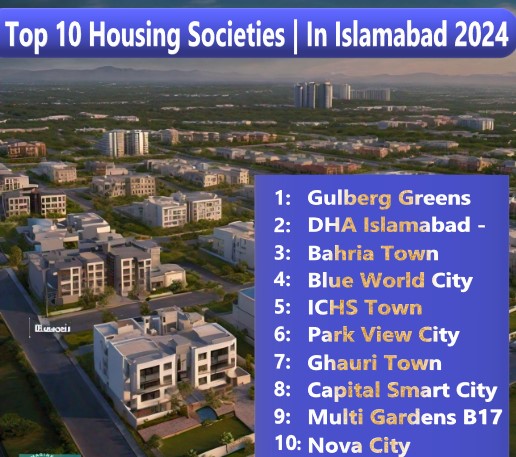
A comparison is meaningful only if you use the same benchmark to evaluate all the projects. Names like DHA Islamabad, Bahria Town, Capital Smart City, Park View City or Gulberg Islamabad may be familiar and listed but you can’t assume one society’s label makes all segments, blocks, extensions and plots of that society acceptable. Crosscheck each separately.
| Factor | What to investigate |
| Legal status | Decision-making body, status of LOP and NOC records, notices |
| Plot identification | Exact block, number, size and approved location |
| Total cost | Taxes and other fees and outstanding dues. |
| Development | Completed infrastructure versus proposals |
| Possession | Current eligibility and conditions |
| Accessibility | Real travel routes and nearby services |
| Resale potential | Evidence of completed sales, not price inquiries |
| Exit conditions | Transfer rules, dues, and how to sell later |
A lower price may be due to a less advanced stage, more weak demand, unresolved paperwork, or increased legal risk.
Step 9: Put the Agreement in Writing
Make sure the property clears your checks first and note down the commercial terms before you send funds on a big scale. The contract must show the vendors and property, price, terms of payment, the documents to be sent and who has to pay any tax, charges or duties.
It should specify the method of clearing any outstanding dues, or if it is not possible to facilitate the transfer and how any advance will be accounted for in that case.
- Use verifiable bank accounts and retain all receipts.
- Do not buy the product for a verbal promise of documents to be sent.
- Engage a property lawyer to go through the terms of the agreement – especially if purchasing an expensive property.
Step 10: Complete the Correct Transfer Procedure
There is no one transfer process for all properties. It will all differ if you are purchasing a society-allotted plot, file and membership interest, or if you are buying land that will require proper registration.
- Society-controlled plots: Society’s application, verification, clearance of dues, transfer papers and fee payment are generally there.
- Registered land: procedures for the registration of deeds and land-records. Link: for the registration of deeds https://ictadministration.gov.pk/registration-of-deed/ The registration of deeds and records of land.
Before you sign on the dotted line:
Check with the appropriate office to make sure the process is needed.
- Submit original documents and identification.
- Make advance tax payments and related fees in the same manner, and keep your receipts as proof of such payments.
- Secure the official transfer receipt, registered deed or latest ownership record.
- Verify that the record reflects the correct buyer and plots.
- Keep copies of every agreement, final document, receipt.
Failure to pay the purchase price does not automatically transfer the legal ownership. Confirm transfer at the society or record office.
Step 11: Maintain a Permanent Property File
Once bought, save your documents, and keep copies on your computer, of the contract, proof of payment and tax receipts, agreement and title documents, transfer deed and all communication from the management company. Track future payments, maintenance costs and building requirements. Having this information in order will simplify resale, inheritance, inspection, building approval and ownership, while the purchase price will be important to work out capital gains tax.
Red Flags That Should Make You Think Twice
- The importer or dealer is unable to refer to the authority that endorsed the scheme.
- It’s listed on a CDA or RDA illegal-scheme notice, or you can’t see it anywhere else.
- Demanding quick payment, “one-time” booking promotions or profit guarantees.
- The price is lower than similar plots without explanation.
- Number of or positions that cannot be matched to an approved layout.
- Photocopies of documents, Screenshots, Chat messages.
- What is an auction listing? (could be: They sell you a file as if it were a document. )
- Cash demand or tendency to avoid checkout channels.
- Seller does not want society or your lawyer to examine the records.
Common Mistakes to Avoid
- Buying on price. Discover the reasons behind a plot’s low cost before making it a bargain.
- Treating LOP approval like an NOC. Verify the status that the authority entered exactly.
- The insured scheme represents your entire plot is clear. Check the plot with the seller separately.
- Verbal promises. Obtain written dates, charges, transfer terms.
- Don’t just budget for the price. Factor in taxes, fees and dues from the start.
- Avoiding the site inspection. Make sure you check that the plot is there in the location you are told it is.
- Not the Filer! Your filer status may multiply your tax bill by ten times or more. Confirm the filer status of both parties prior to setting the price.
- Pay first, verify later. Full ownership and clearance carried out first.
Frequently Asked Questions
Begin with the precise location and the authority in charge of the land. Next, confirm the scheme’s approval from official sources, then the land’s ownership and the seller’s entitlement to sell.
No. Scheme approval applies but does not confirm or imply ownership, availability to transfer, borders of or paid for individual plots. Check the scheme and the property.
An LOP is simply a layout plan that has been approved by the authority. An NOC is a different approval which links to the development requirements. Consult the official record to find out whether they have actually been granted for the phase of the project you are purchasing in.
Check the list of CDA and RDA illegal housing schemes and their scheme name and their public notices. If you are not certain of your position then seek clarification in writing from the authority before make any payments.
It comes down to what you want, and your budget and timetable. A developed plot is ready for easier, quicker use. With an early-stage project, there is greater risk in getting it finished, owned and used. Neither guarantees income.
The papers are normally put together from a loan and, ifs, contemporary ownership or allotment documents, ID, paperwork and evidence of payment, transfer or such, and a recorded deed if still available. Verify the record with that department and also a real estate attorney.
For 2027 filer reported flat 1.25% as buyer under 236K while 2.75% as seller under 236C and other costs like stamp duty registration and society fee levies. These come up to a very high amount if you are a non filer – check with FBR or a tax professional for current figures.
Final Checklist Before You Purchase
- Set in the precise spot and the contesting authority.
- Check the scheme on the official CDA or RDA register (also illegal-scheme register)
- Confirmed LOP and NOC status of the particular phase and block
- Confirmed the plot & what rights the file/allotment accounts for.
- Involved the seller in the financing in writing
- Verified unpaid balances, development charges and taxes
- Verified account holder status and determined the total cost for each.
- Propiedad real el visito la parcela o coordido inspeccion fiable
- Understood possession and transfer conditions
- Wrote down payment terms; had it reviewed
- Established what official record will verify transfer was completed
If any answer is uncertain, halt the process until you receive dependable verification.
Conclusion
Persuading buyers to take a prospect is patience and proof. CDA’s stamp is unmistakable, and taxes changes in July 2026 continue to bite. Verify it’s real, fact check the scheme and the exact plot, think through the whole cost including taxes, walk the site, and confirm the transfer has occurred at the right place. They won’t eliminate the risk, but you don’t have to base your decision on advertising.
The following article is for information only, not legal, tax, or investment advice. Requirements, tax rates, prices, fees, process, and approval status are subject to change. Always verify with the authorized agency and a professional before you make a payment.
References and Where to Cross-Check
- Capital Development Authority: Housing Schemes and Illegal Housing Scheme Lists (cda.gov.pk)
- Rawalpindi Development Authority: private housing schemes and notices (rda.gop.pk)
- Federal Board of Revenue: withholding tax rate card and notified valuation SROs (fbr.gov.pk)
- ICT Administration: registration of deeds (ictadministration.gov.pk)
- Comments on the Property Tax Changes introduced by the Finance Act 2026 (secondary sources; cross-verify against the Finance Act and FBR)